Natchez, Mississippi
Natchez History Nerds
We have done so much in this town that it is hard to summarize. That describes this whole trip thus far—I’m having a hard time keeping up with us!
Bear with me . . . this post got pretty long.
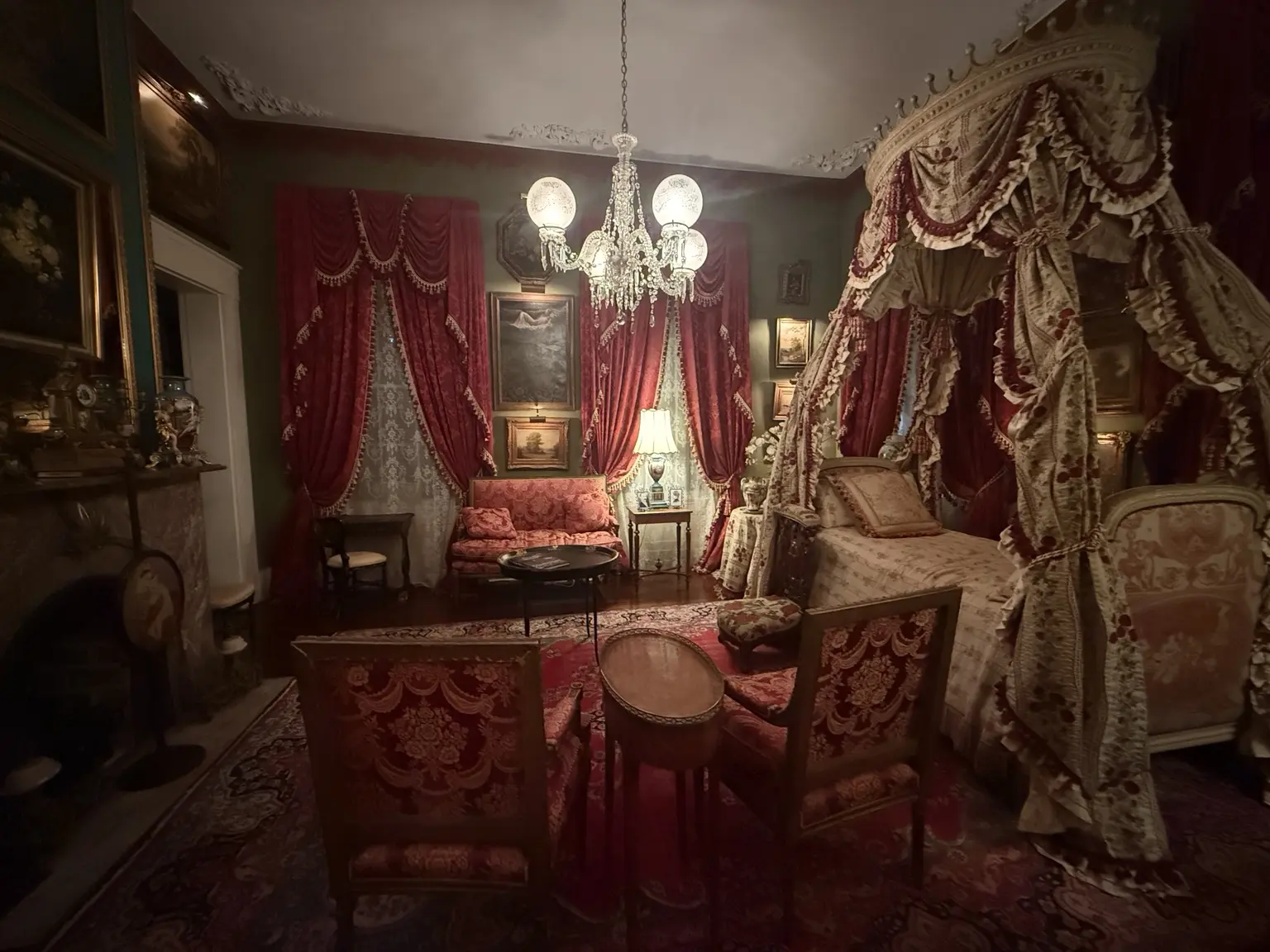
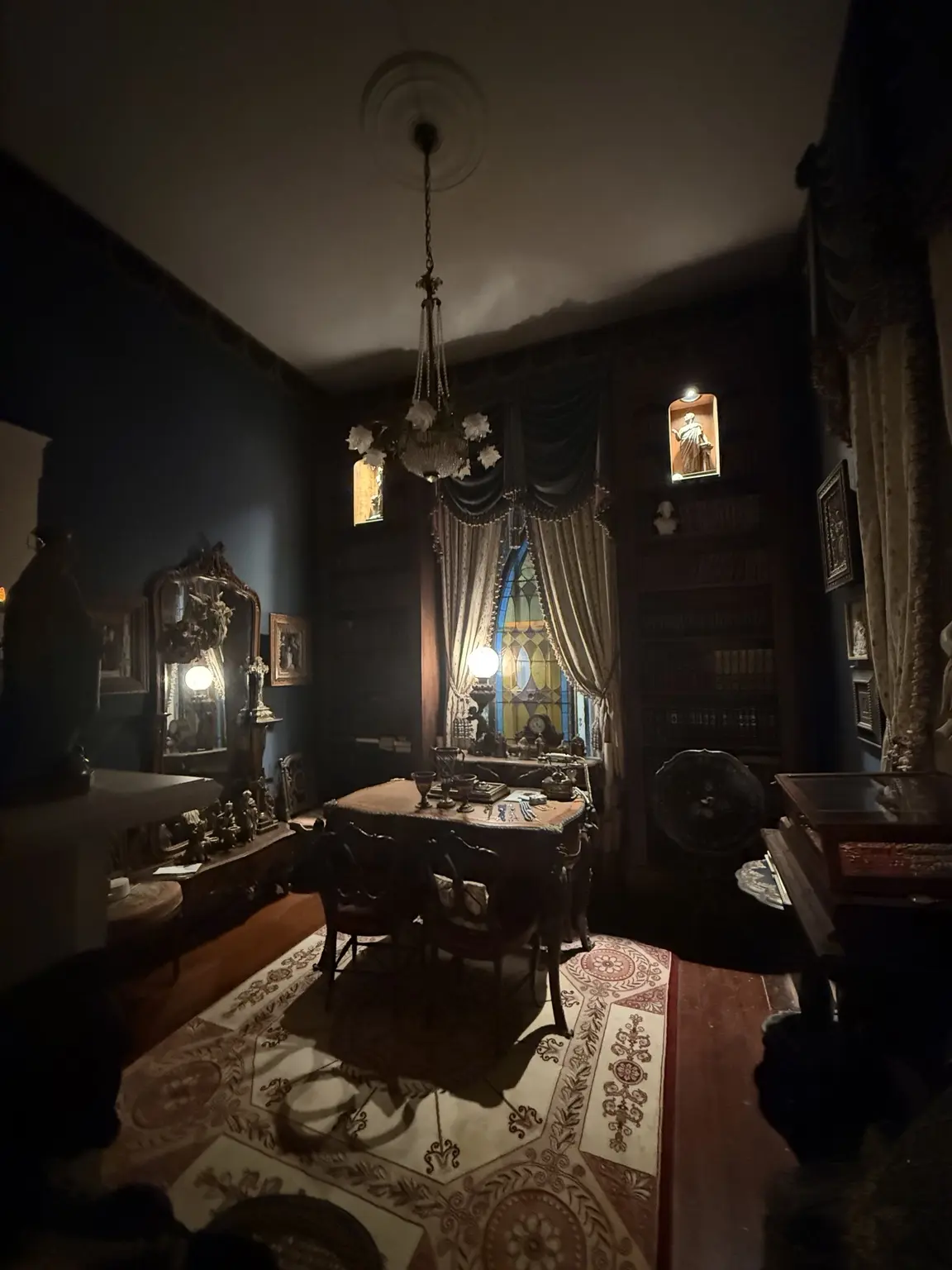
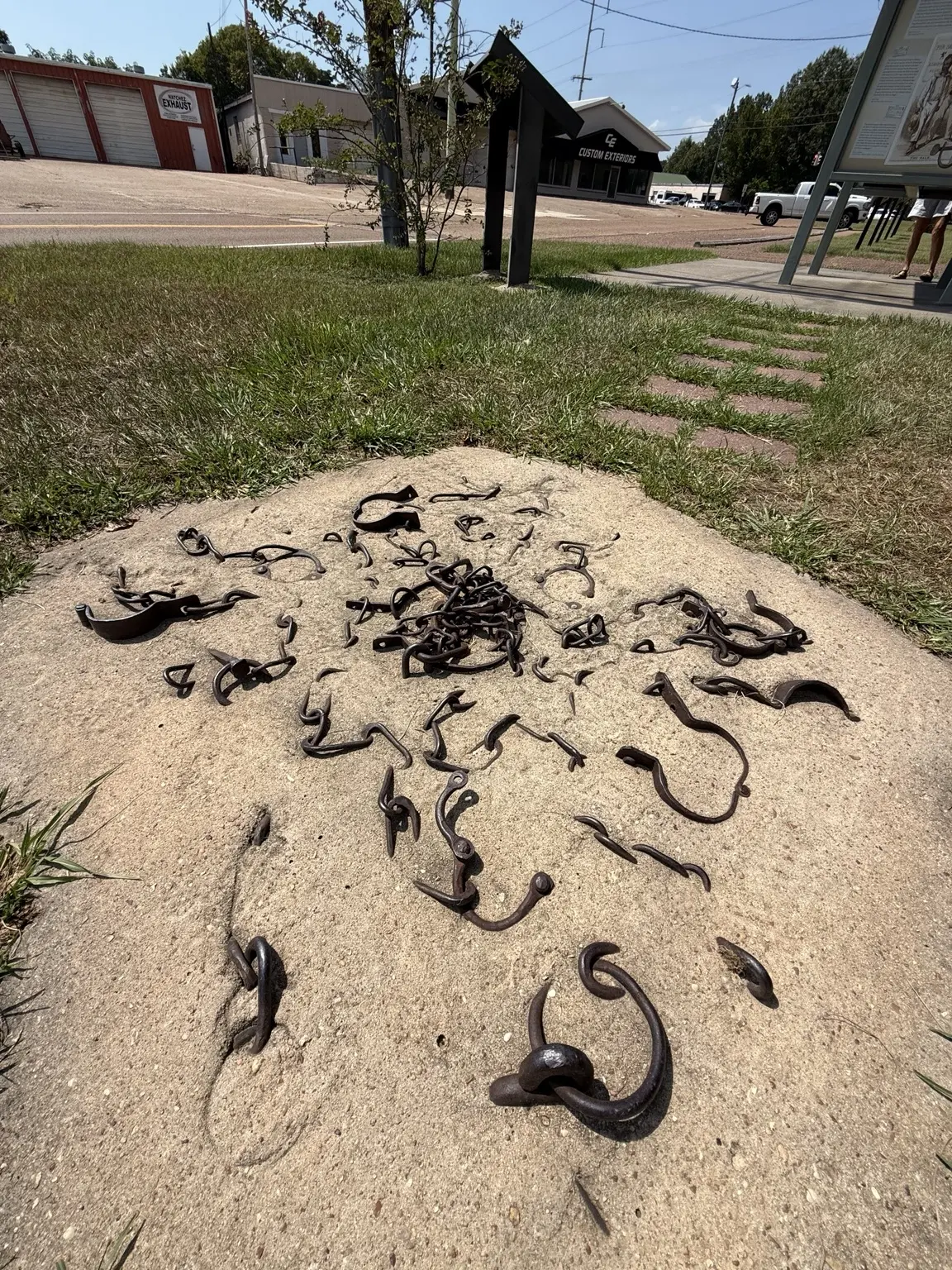
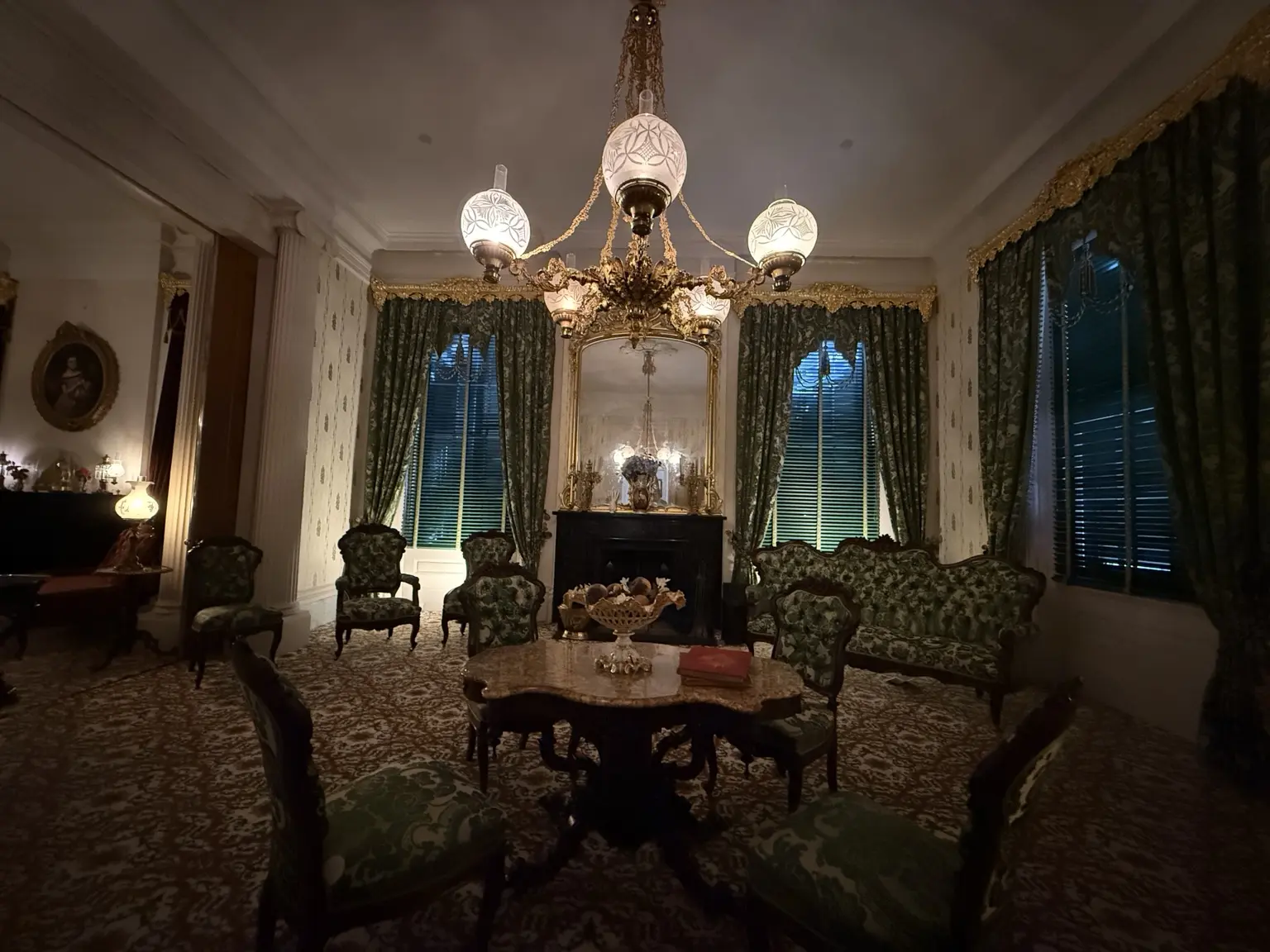
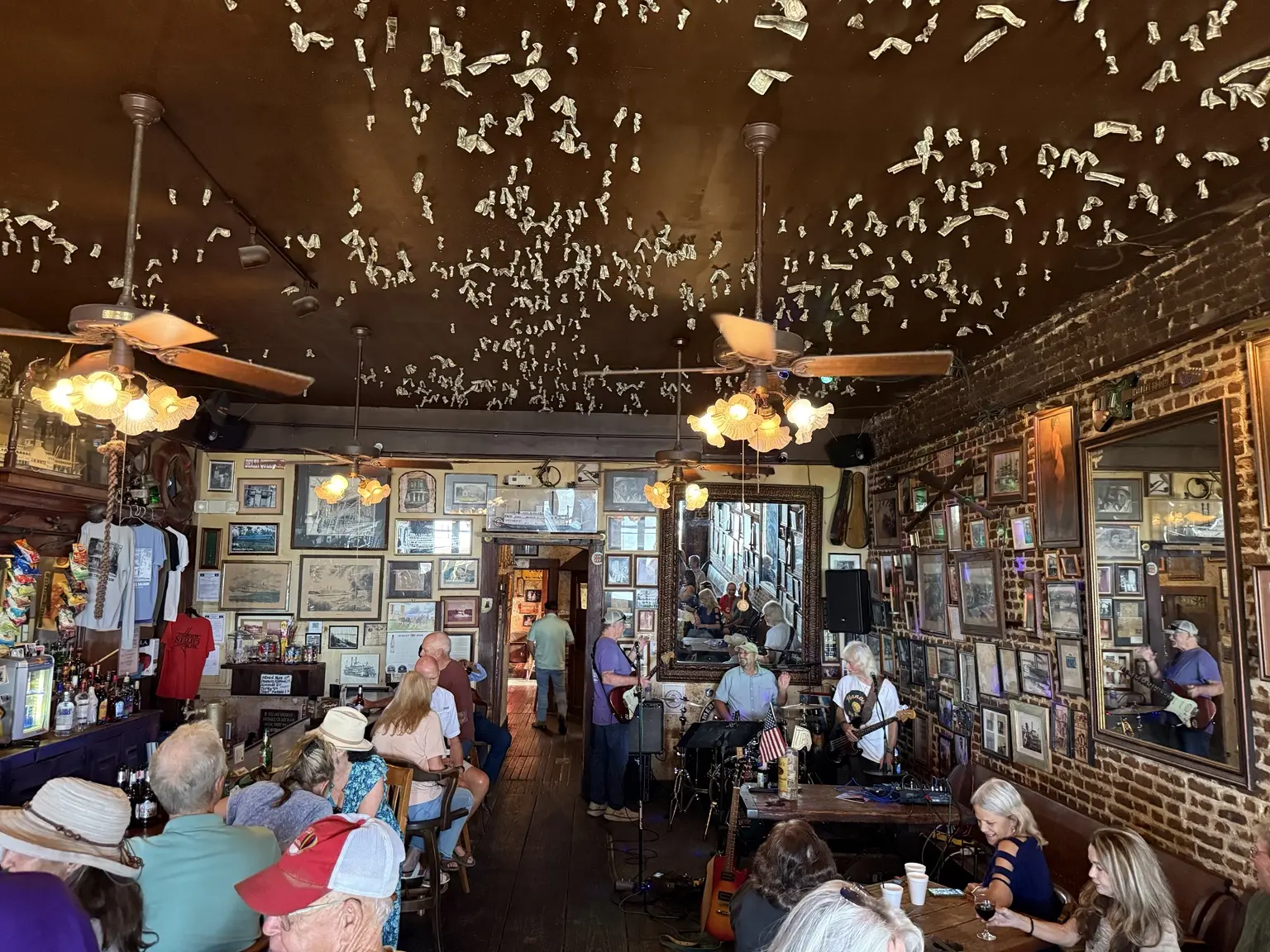
This area is so dense with history, and we have been ambitious. On the first day, we visited the remains of an old slave market, a massive Natchez Indian village, an elaborate old antebellum mansion. And then had drinks and dinner down by the docks in what used to be the rough-and-tumble part of town.
The evening before
Murder, mystery—and the mayor
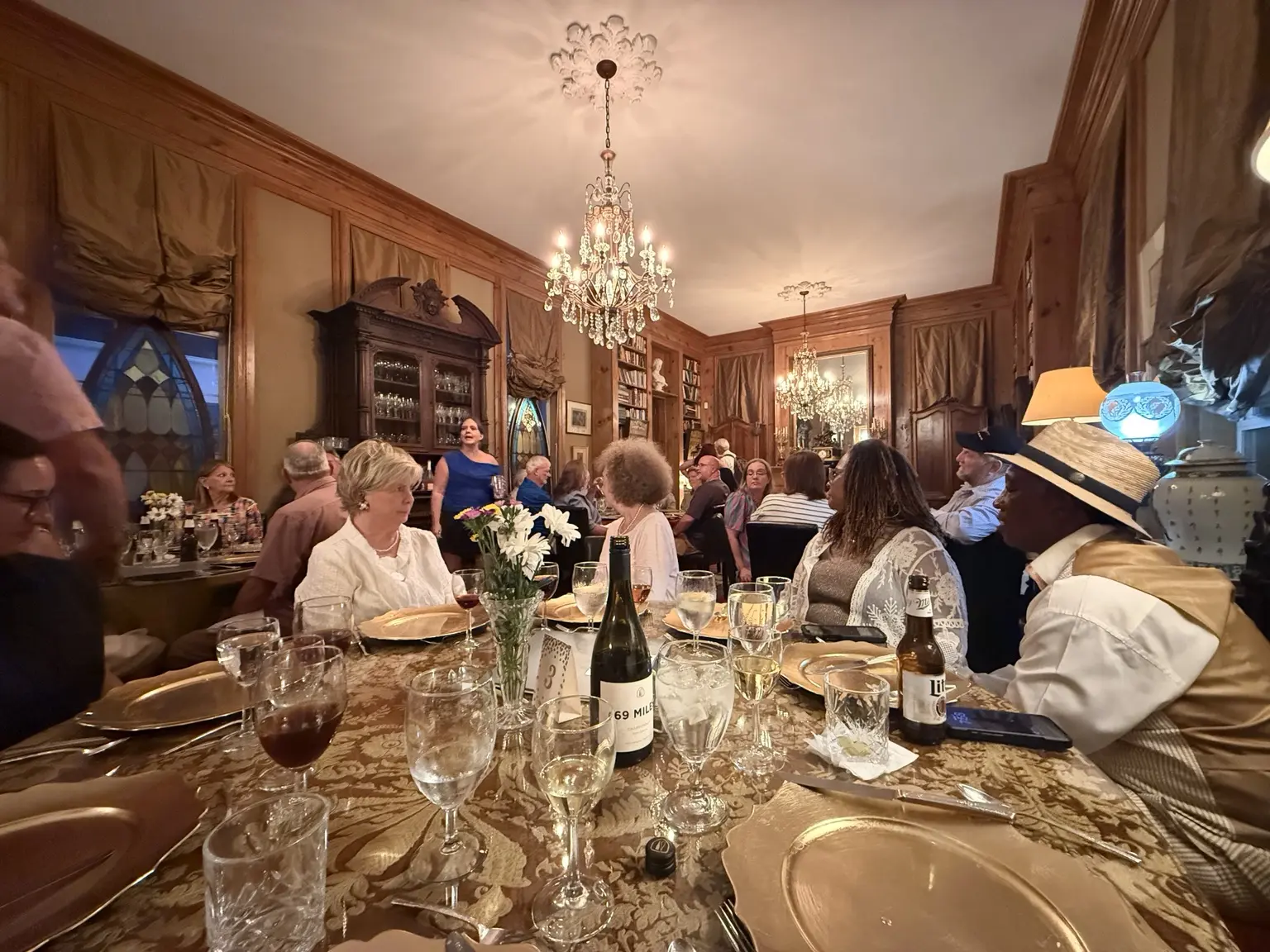
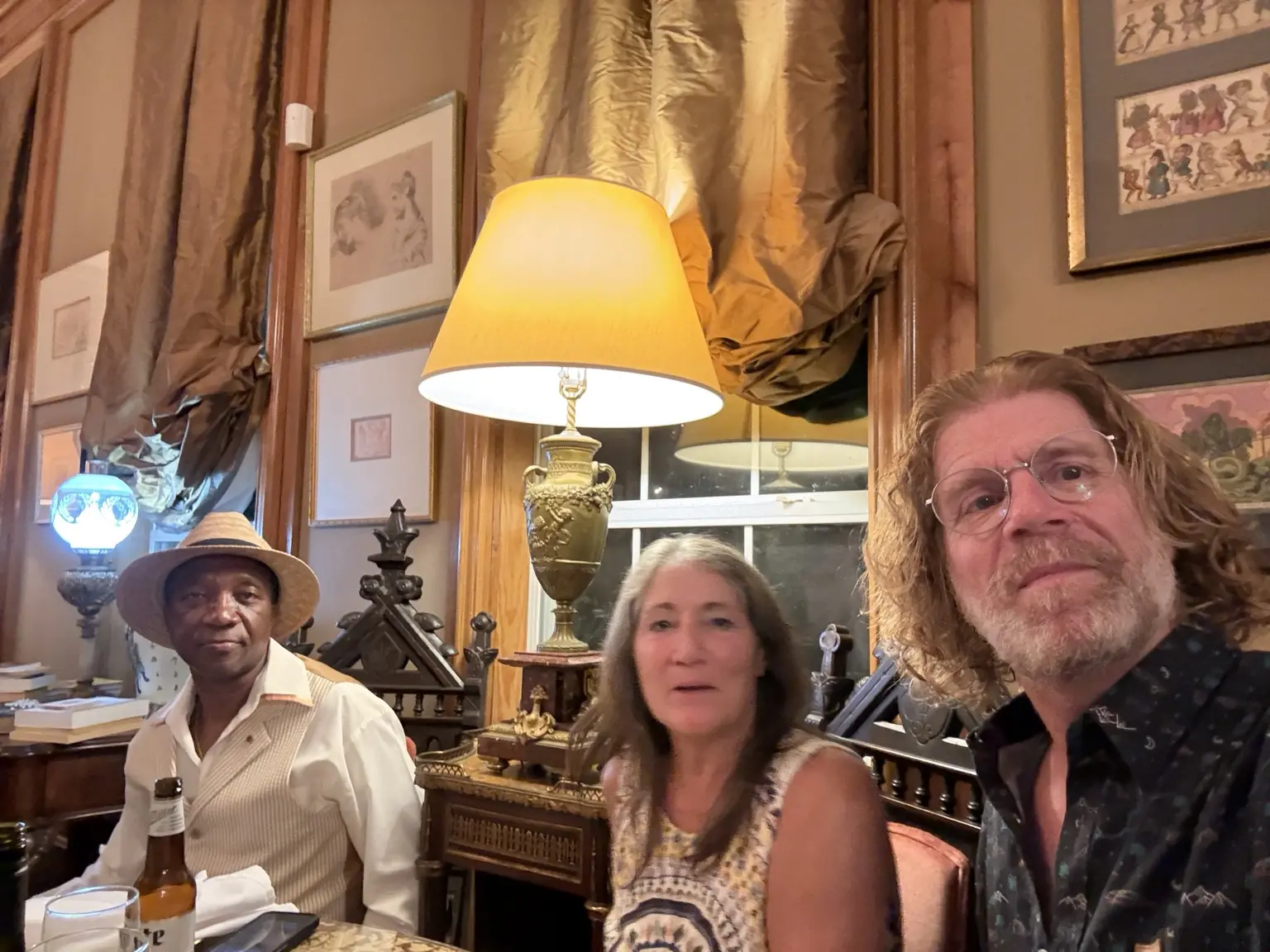
Oh, almost forgot—we started the evening before with a murder mystery dinner in an old mansion. I think I mentioned the mayor of Natchez playing piano and singing, which certainly wasn’t on the schedule.
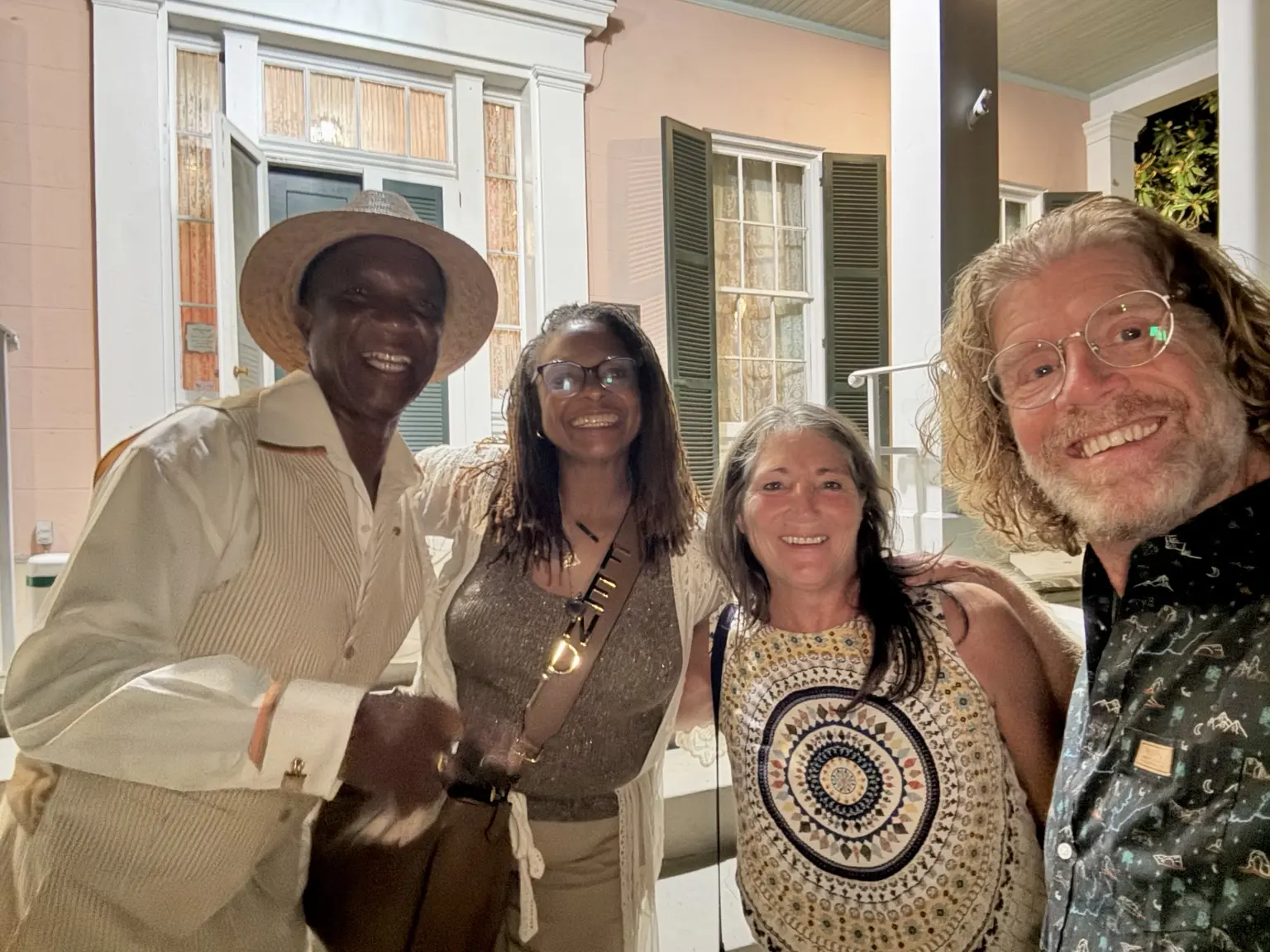
It has continued to be crazy hot here as well, so we have definitely prioritized air conditioning rather than ambling around town. “Feels like 105” actually feels like 106, we are pretty sure.
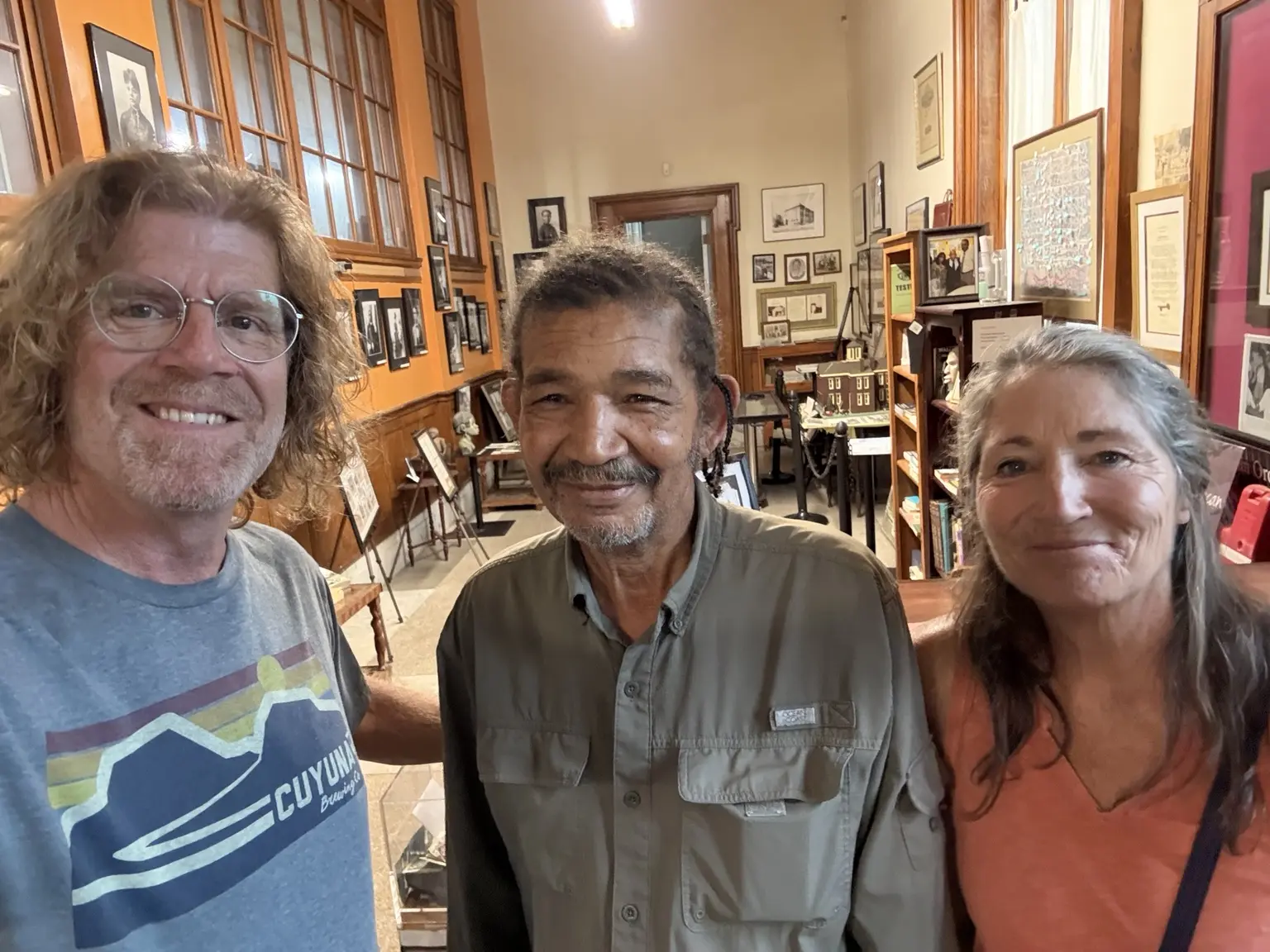
Our experiences with beautiful humans continue to be extraordinary. Day two saw us visit the African American Museum, dense with information and artifacts, and engage with museum director Bobby Dennis, a man with encyclopedic knowledge and thoughtful and compassionate insight into so much of the history of the area. We spent a lot of time discussing the various ways that people can approach history and ask questions.
A beautiful human
Bobby Dennis
Encyclopedic knowledge, thoughtful insight—and a long conversation about how people approach history and ask questions.
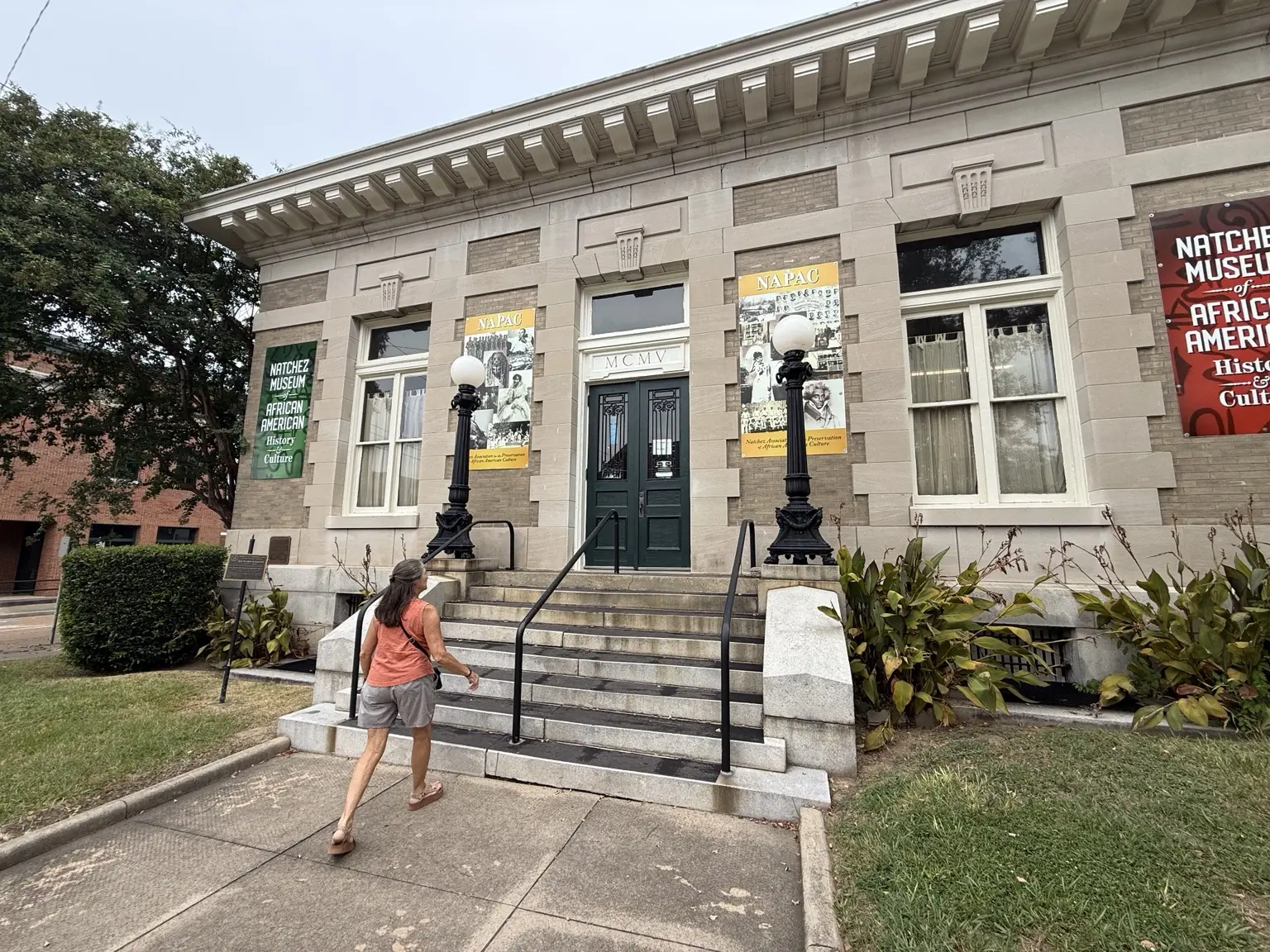
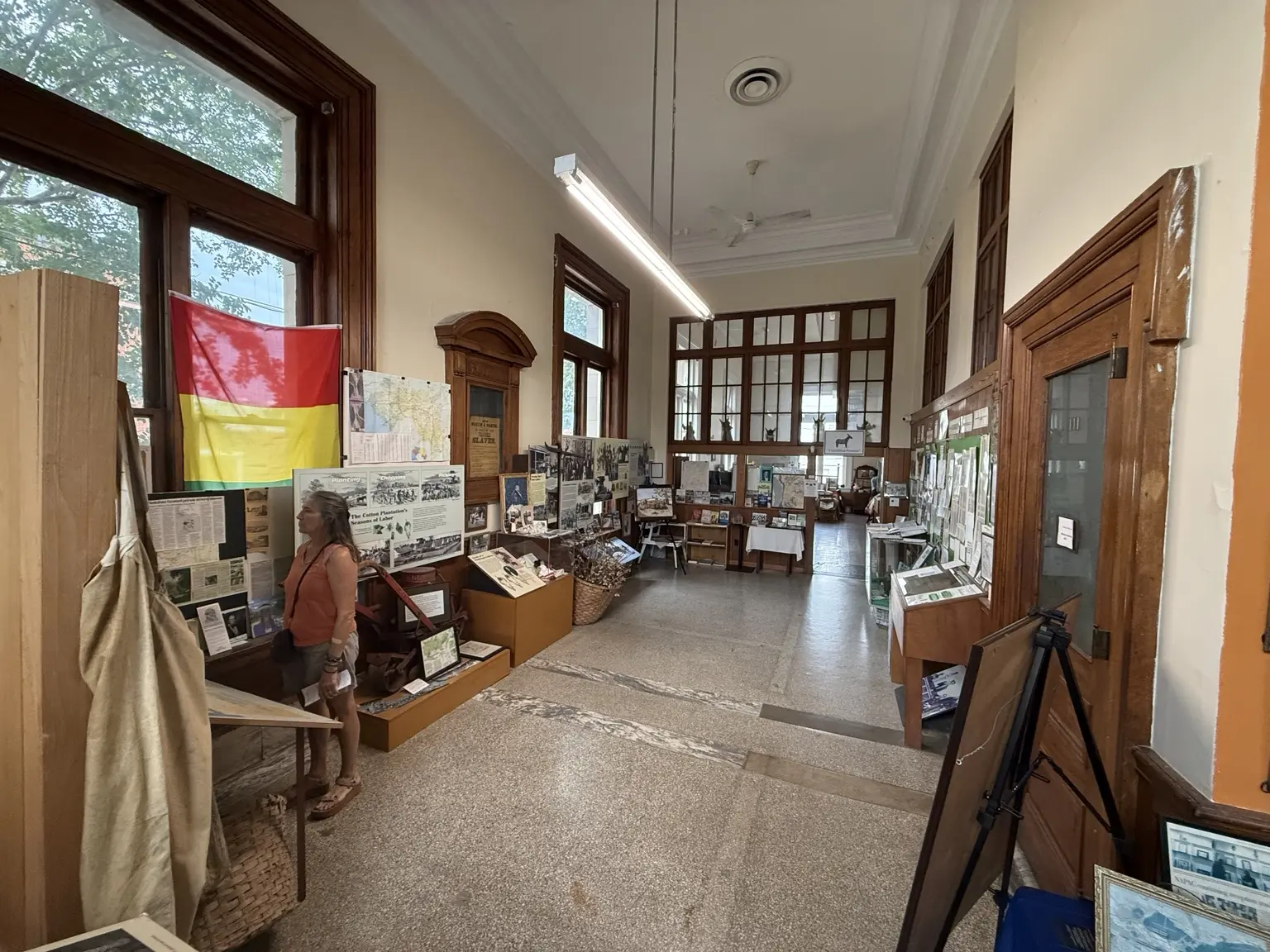
Then on to the William Johnson House, a National Park Service site. Johnson was a free Black man in Natchez who was quite successful but paradoxically also owned slaves. An interesting visit, but frustratingly his writings give little insight into that odd situation.
Stranger still, he was murdered, and it was witnessed by several people. However, his murderer went free because Black people were not allowed to testify in court.
Let that sink in.
From there we visited the Rhythm Nightclub Memorial Museum, devoted to the 1940 fire that killed more than 200 Black people gathered for a night of music and dancing. The museum is basically one small room and the life’s work of Monroe Sago and his wife, who decided this story would not be forgotten.
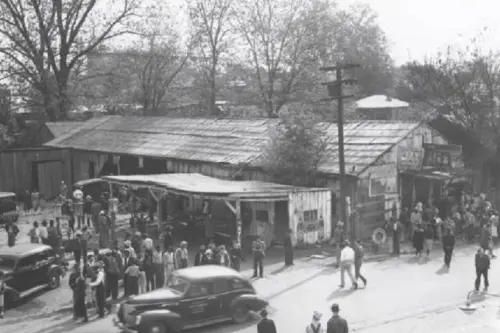
Monroe told us the story.
And told us the story.
And told us some more story.
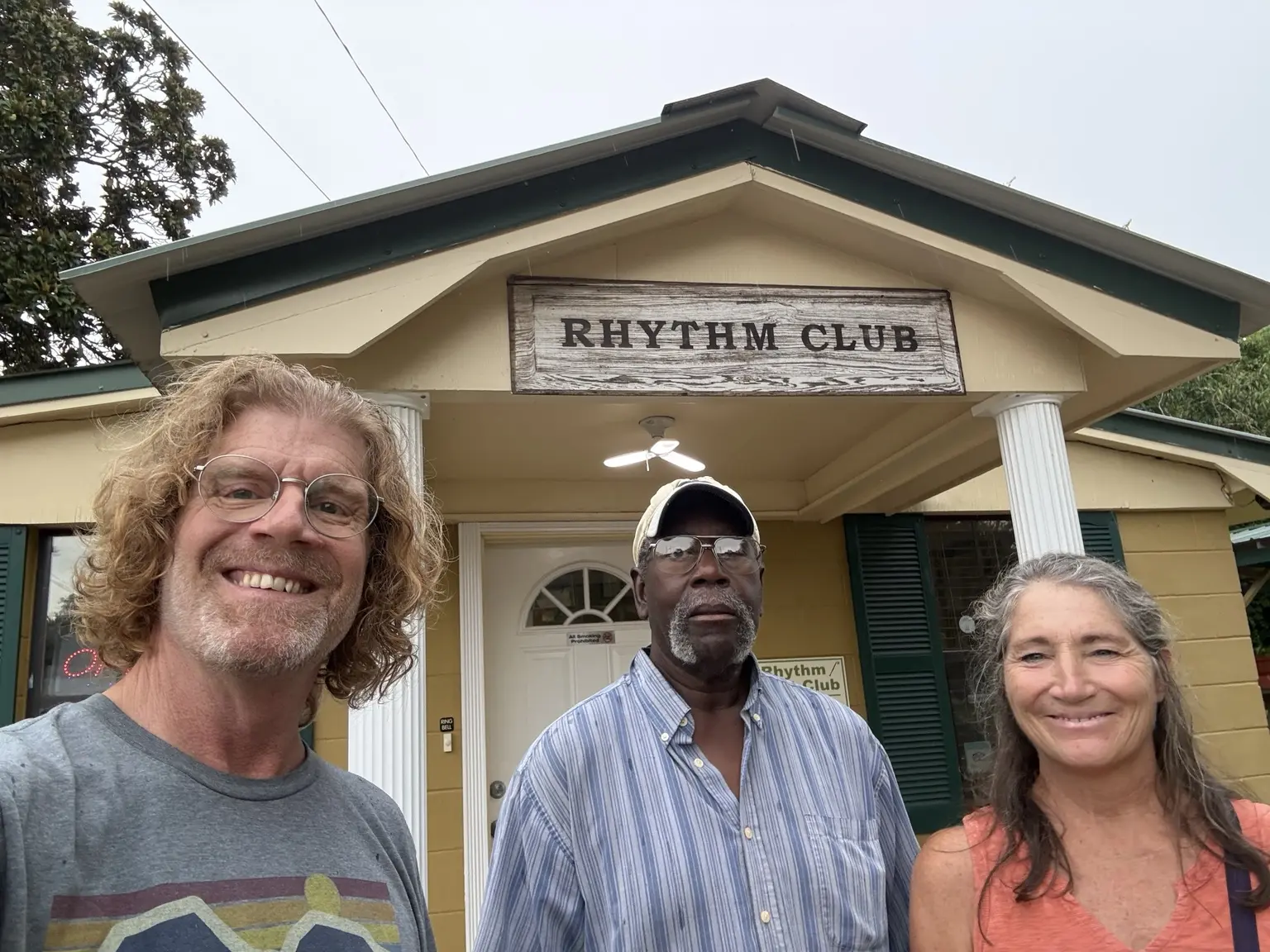
Nearly two hours later we stumbled back outside with addled brains, a book and considerably less money because OF COURSE we donated. It was unexpected, exhausting, completely unique and absolutely worth it.
Monroe is one of those remarkable humans who has grabbed hold of a piece of history with both hands and simply refuses to let it disappear.
Modern-day fire codes sprang in large part from this tragedy.
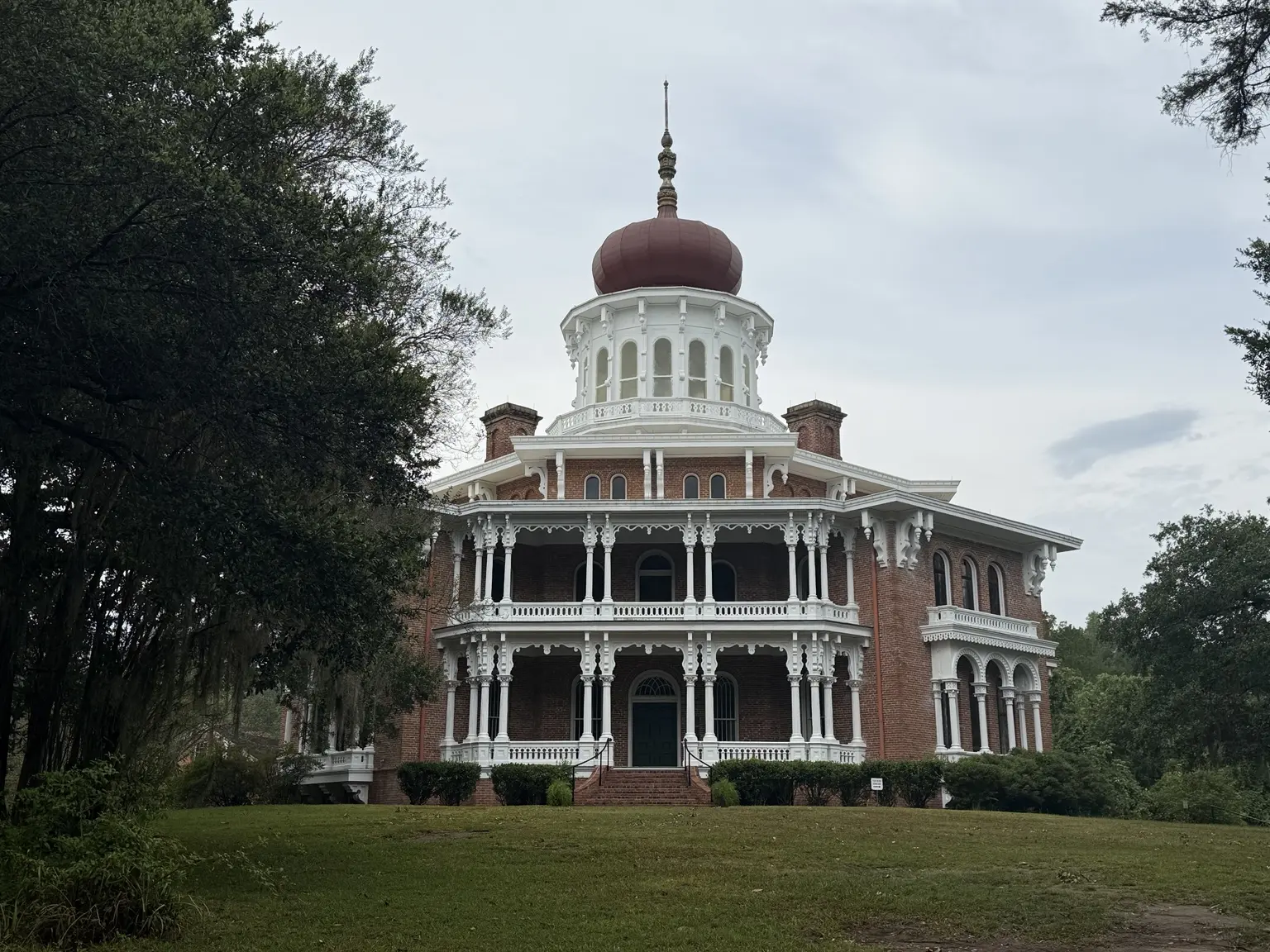
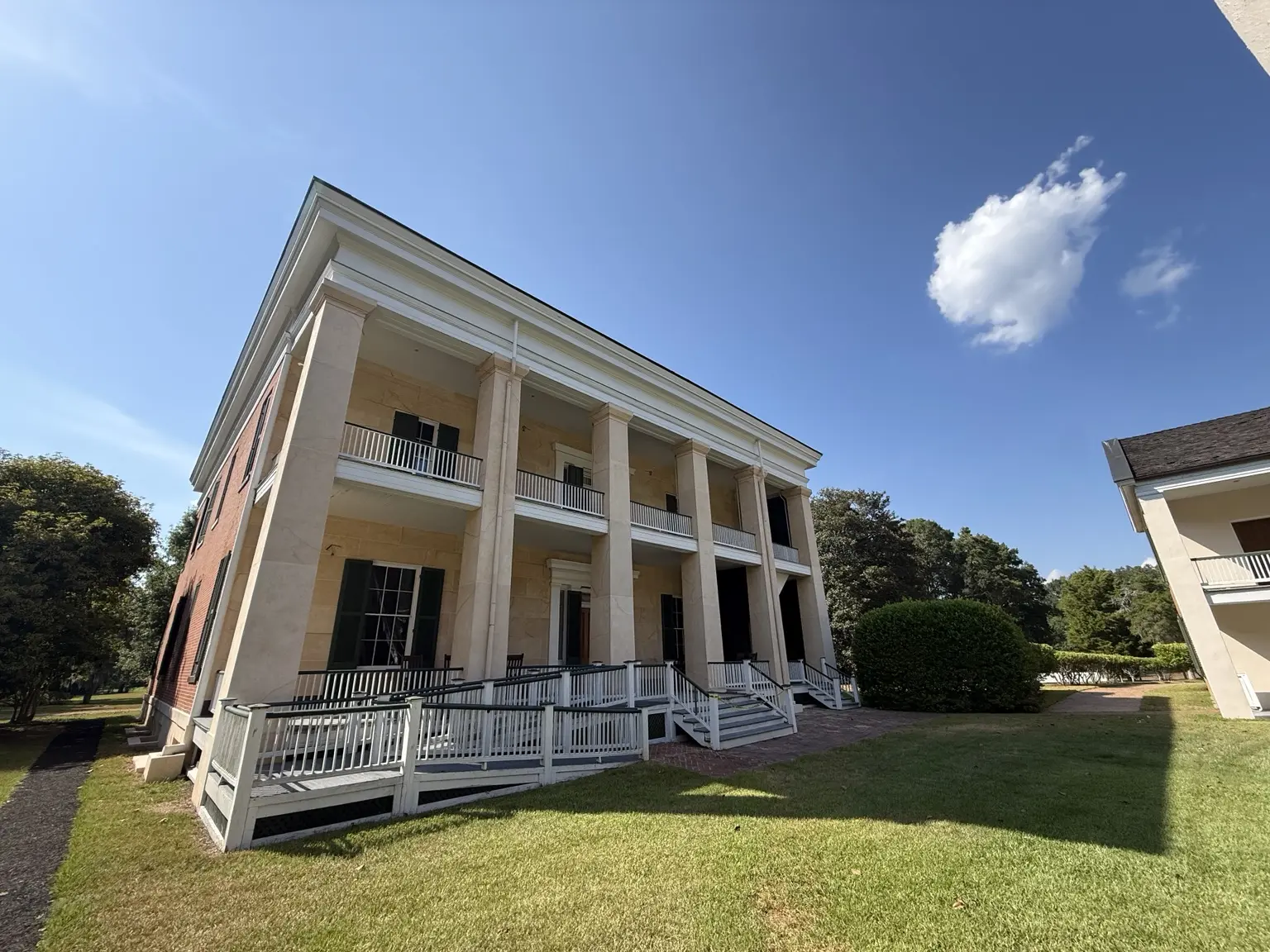
Our final stop was Longwood, an enormous octagonal mansion whose construction was interrupted by the Civil War. The finished lower level is grand and elegant, but above it the house remains a cavernous brick skeleton—an architectural “well, THAT didn’t go as planned” frozen in time. It’s a long story.
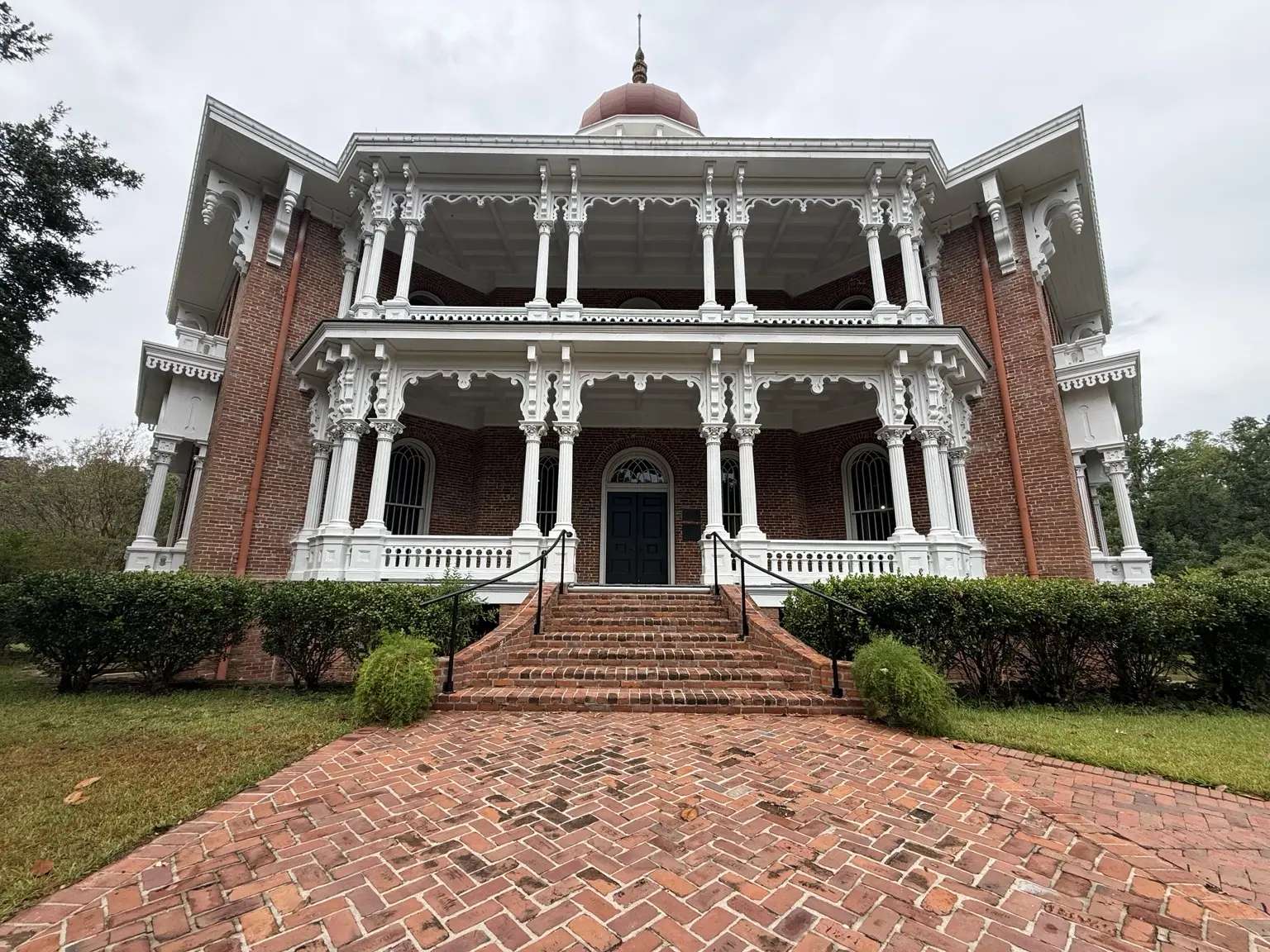
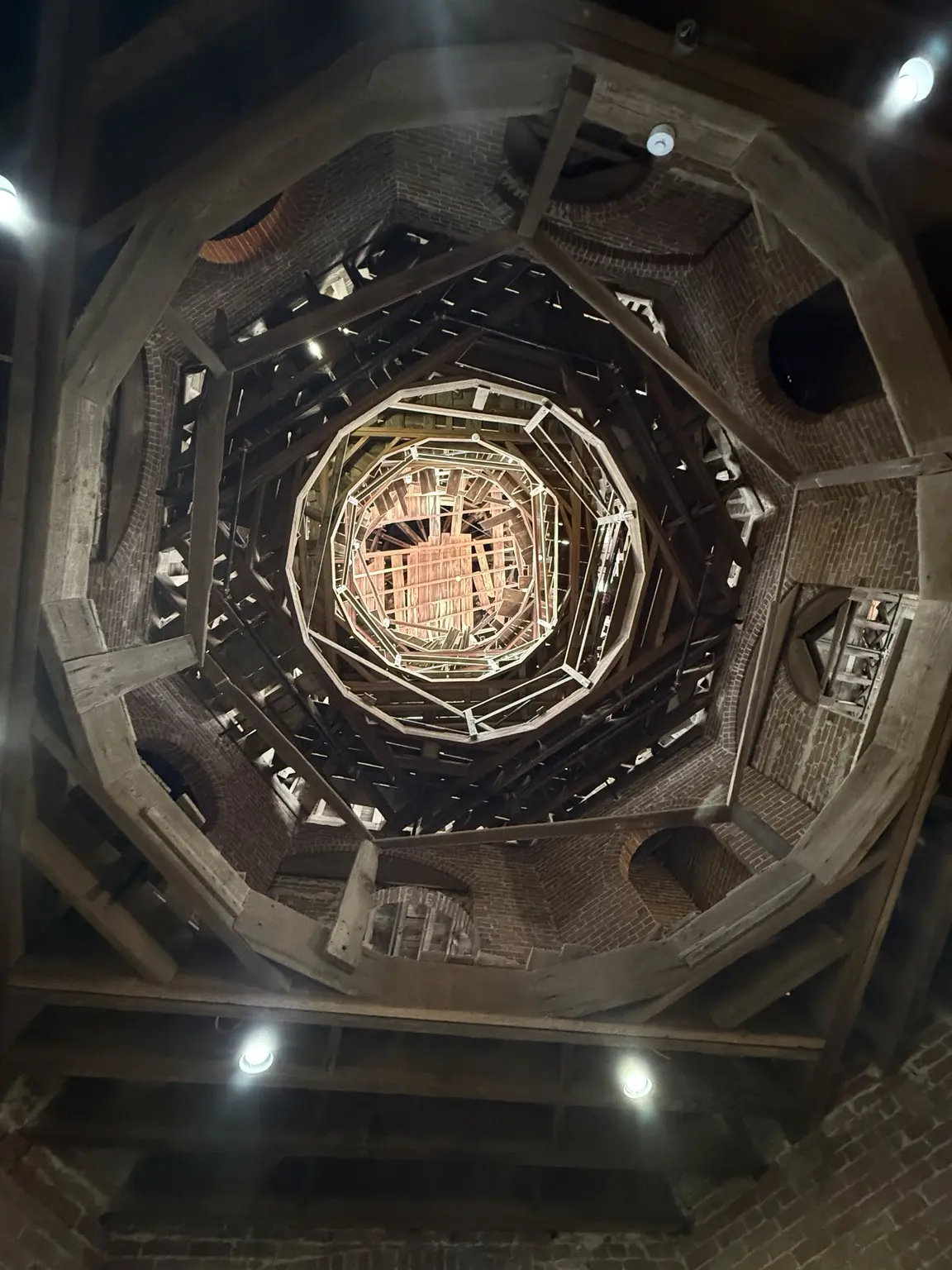
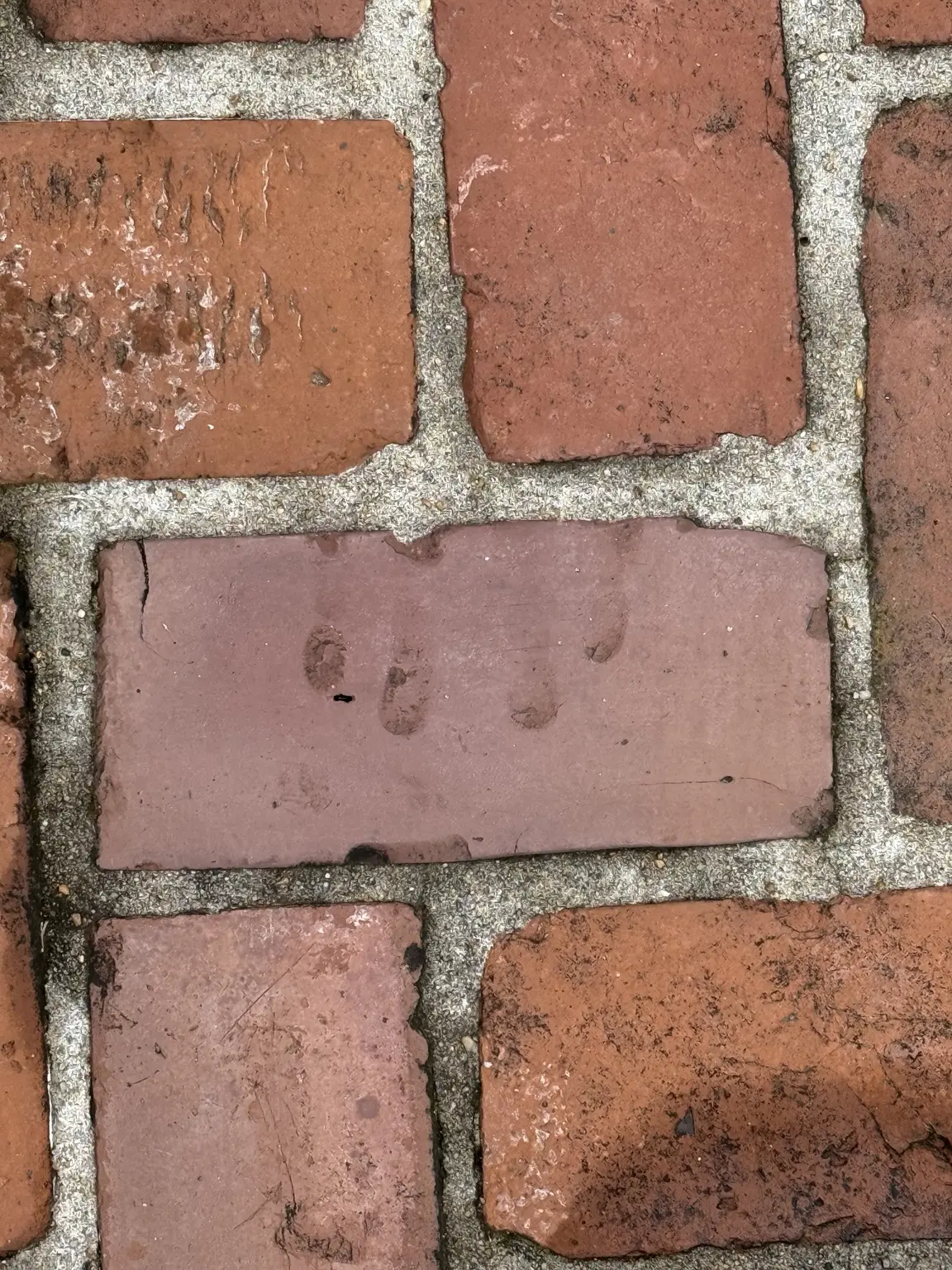
Our guide fired family facts at us with machine-gun efficiency, which was perhaps unfortunate because by then our brains had already absorbed the African American History Museum, William Johnson, Monroe Sago and the Rhythm fire.
Then, just to put a final cherry atop our history sundae, she became the first guide on this entire trip to explain that the owners were very nice and slavery there really wasn’t so bad.
Ummmm.
We had some thoughts.
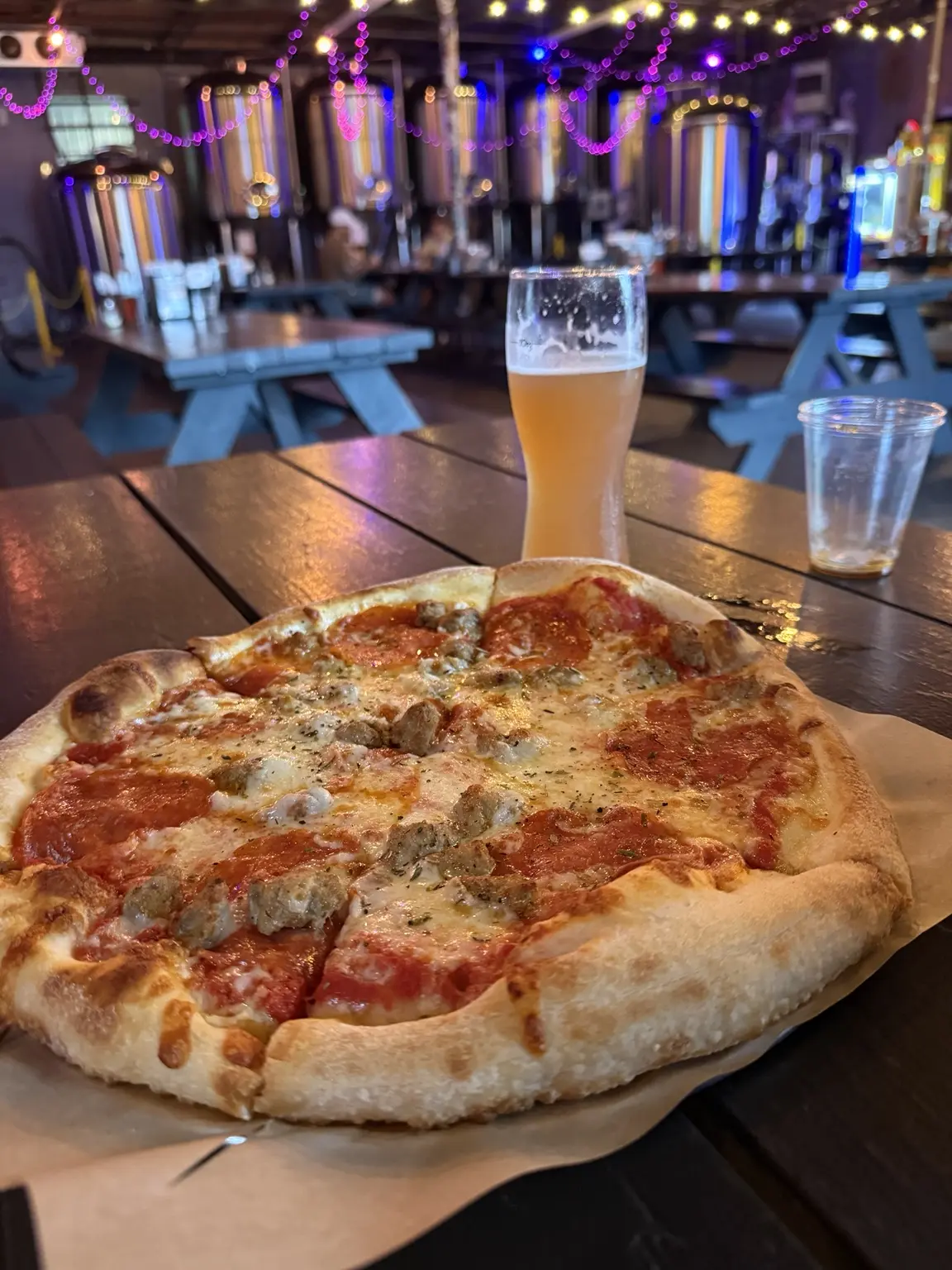
At that point we realized we had somehow skipped lunch entirely, so we retreated to Natchez Brewing Co. for great beer and pizza.
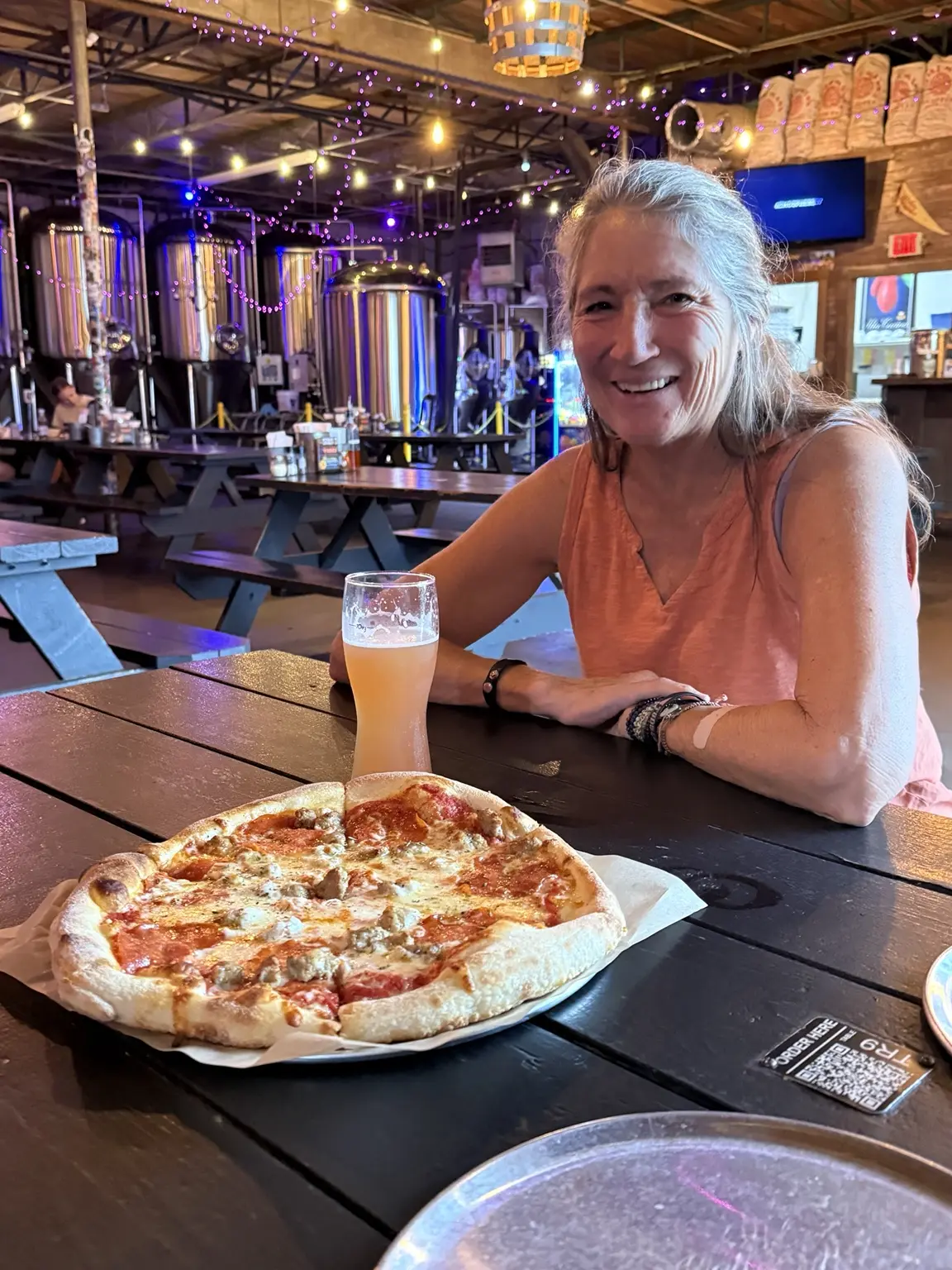
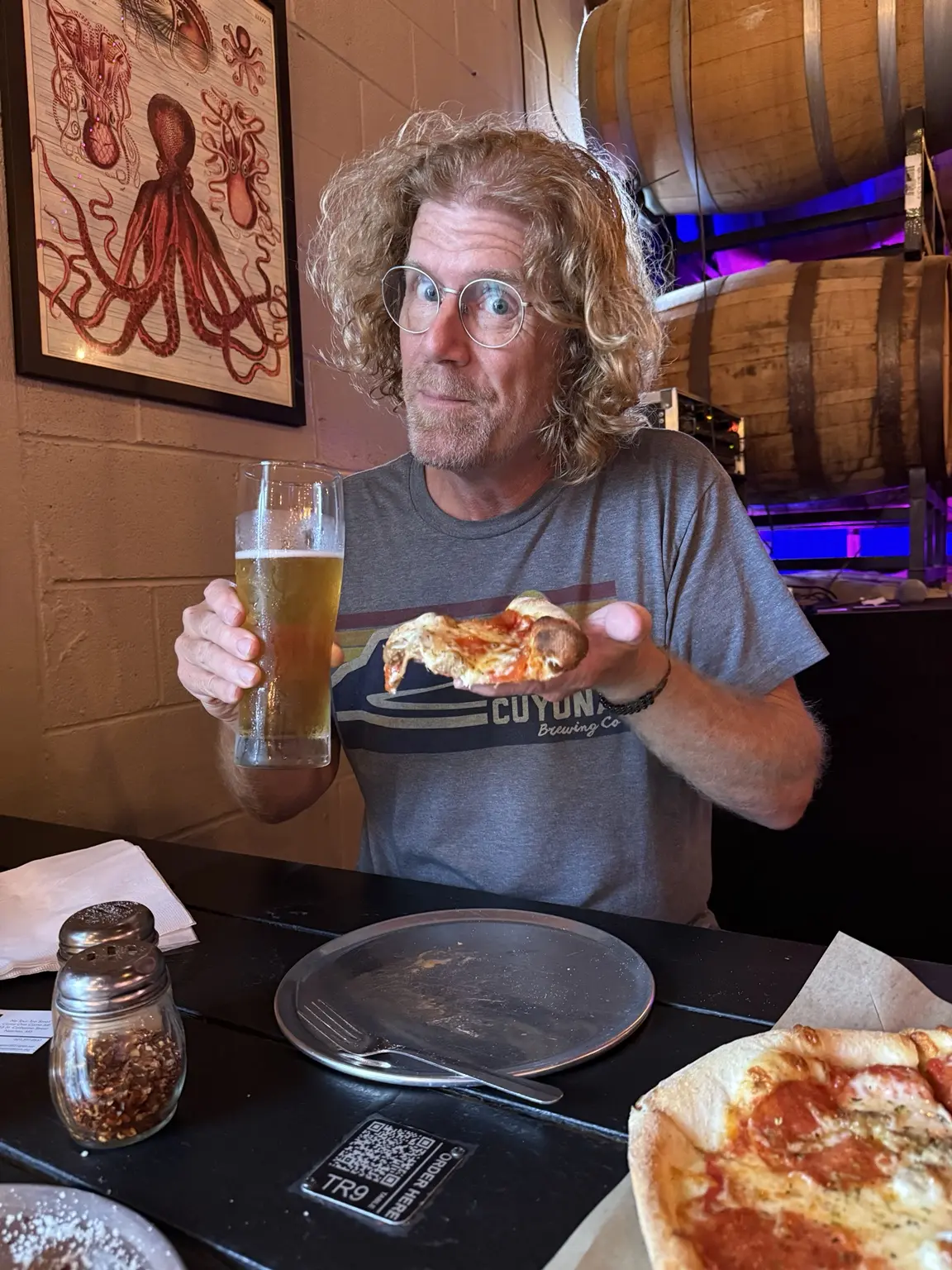
And that is how we became Level 50 Natchez History Nerds.
Onward!